
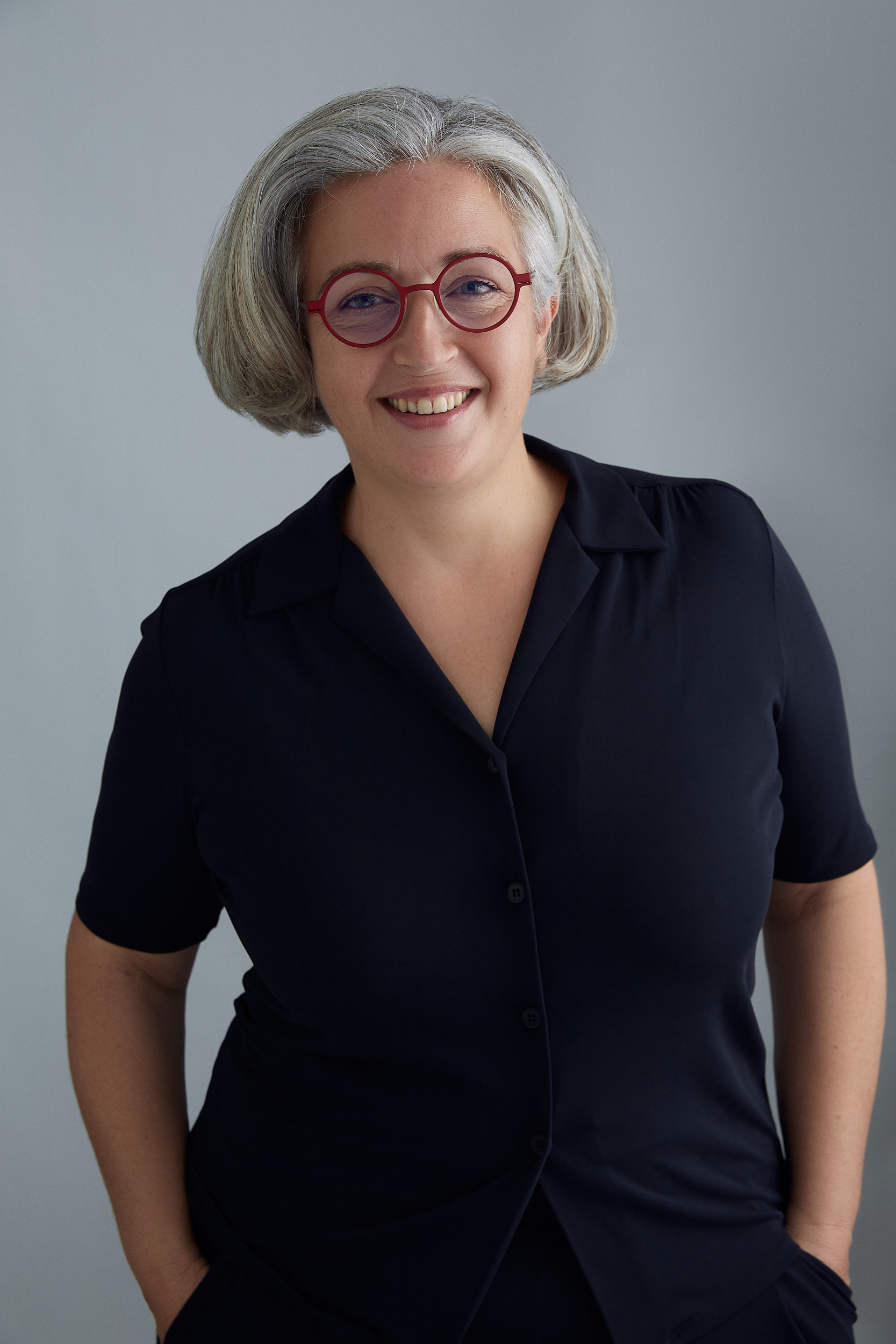
Hi. I'm Josianne
Who we are shapes how we coach. A coach can only take her clients as far as she has been herself.
Here is some of my story and some of the areas where I have done the work.
BEGINNINGS
I learned early that 'normal' is a relative concept.
I was born in Belgium. When I was 7, my family unexpectedly moved to Nigeria. My father had a choice: lose his job as his company closed its Belgian operations during one of many economic crises, or move abroad.
We were the first in our family to live overseas. We were migrants, not expatriates. That distinction matters in terms of experience.
Life in Nigeria in the late 1970s was unpredictable. We arrived after a coup and left ten years later, after the next one. Our father taught us to duck when we heard machine guns. Electricity cuts were frequent. When power disappeared long enough, the water stopped too.
Those were my first lessons in how quickly "normal" life can become adventurous, confusing and uncertain in equal measure... and how much your mindset shapes your experience of it.
My parents could not afford international school fees, so my first year was spent being homeschooled. To put it gently, it was not always smooth. So they made the difficult decision to send me back to Belgium to attend boarding school.
I was 8 when my symbolic umbilical cord was cut. My younger sister was only 3 and remained with my parents.
Being separated from my family so young was painful and, in many ways, a defining moment of my childhood.
I was made to feel different in many ways. We all know how wonderful and cruel children can be. I became more perceptive and better at finding ways to connect with others.
There was a part of me that simply did not accept being judged for something I couldn't control.
I was also born left-handed at a time when this was still considered abnormal, so my teachers "helped" me become right-handed. I am still relatively ambidextrous today.
What made that period more enjoyable were the ladies who cooked for us during the week, and my maternal grandfather.
Their delicious food and wonderful hugs (years later, I found out my mother had asked them to keep an eye on me during the week).
His pranks and his ability to capture my imagination with small adventures.
I spent many weekends with him, and those visits created a bond that stayed with me for the rest of his life. I loved the simplicity of my weekends with my grandad. Playing cards. Laughing a lot. Looking back, I realise he was also one of my earliest and most impactful teachers.
After three years my father renegotiated his contract and I returned to Nigeria, joining the French international school. Once again I had to adapt: new environment, new educational system, new school, new friends, and the cultural dynamics of expatriate life.
THE NOMADIC LIFE OF A THIRD CULTURE KID
Belonging everywhere and nowhere at the same time.
Ten years after landing in Lagos, we moved again. First to Ontario, Canada. My parents and sibling went on to Pakistan and Morocco by the time I reached university age.
By then, adapting to new environments had become second nature.
Feeling like a foreigner in my home country felt normal too.
Today this experience is often described as being a third culture kid: someone who grows up across cultures and belongs everywhere and nowhere at the same time.
At the time, it simply meant learning to observe carefully, be comfortable in my own company, and flexible with my needs.
When you are frequently the outsider, you develop certain skills early, you:
Learn to adapt quickly
Read situations fast
Notice subtle signals
Become curious and ask questions
Hold the definition of 'normal' loosely
Those early lessons shaped the way I see the world to this day. And, on reflection, much of my career path.
A CONVENTIONAL INDUSTRY FOR AN UNCONVENTIONAL PERSON
Thirty years in financial services. Started by accident.
I was the first in our family to go to university.
My parents made sure I understood the importance of this, and the responsibility it carried. I wanted to study psychology and anthropology, but my father guided me toward what he believed would lead to "a proper job." International relations and politics. The idea was to become a diplomat.
After university I began my career in Brussels during another economic downturn. I failed one of the exams to join the diplomatic service, so my priority became simple: secure a permanent job and make my parents proud.
That decision launched a thirty-year career in financial services by accident, rather than design.
It was a conventional industry.
I was not.
Curiosity has always been one of my strongest drivers. Once I understand a system or pattern, I begin wondering what lies beyond it. As a result, my career path was anything but linear.
I worked across investment banking, retail banking, consultancy and insurance, moving through operations, internal audit, project management, business development, marketing, technology, and leading large transformation programmes.
Each move was less motivated by the desire to climb a ladder and more about understanding how complex systems actually function, and how to encourage people to welcome change. I had an insatiable need to challenge myself, so looked for more and more complex jobs.
This took me from Brussels to London in 1996.
To Edinburgh in 2000, with a husband and two young children.
And eventually to Hong Kong in 2013, where I remain based today.
Moving to Asia accelerated my professional growth in ways I could not have predicted.
I took on regional roles across Asia Pacific, often leading transformation programmes spanning multiple markets and cultures, all requiring influence without direct authority.
Cultural awareness, creative collaboration, and the ability to remain steady in complex environments became some of my most valuable leadership skills.
Eventually I became APAC Regional Chief Digital Officer at a global insurance organisation. C-suite. On paper, I had made it.
I was grateful. I felt accomplished and intellectually stimulated.
And yet something inside me didn't feel right. I didn't understand what was going on.
The constant pressure, pace and stress had become my daily companions.
Finally, I realised that I had spent thirty years pursuing a version of success that wasn't entirely mine.
I was happy, but not content.
And if you have ever looked at your own success and wondered "is this it?", you will recognise that feeling.
It isn't fun.
Many thoughtful professionals reach that point.
THE QUESTION THAT NEVER LEFT ME
Same world. Different internal foundation.
As a child, I was puzzled by something that stayed with me throughout my life: two people can live through the same circumstances and experience them completely differently.
I saw it within my own family.
Some people seemed permanently dissatisfied: critical, cynical, feeling as if victims of their circumstances and convinced life was happening to them.
And then there was my maternal grandfather.
He was born in Belgium in 1913.
He survived WWI as an infant, was drafted into WWII in his 20s and spent four years as a prisoner of war in Germany.
He lived through the Spanish Flu and the Great Depression.
Many of his 12 siblings didn't make it.
Like many of his generation, he carried deep trauma he rarely talked about.
I never saw him lose his self-control, even when triggered. If a war film came on television, he would simply change the channel without a word.
Despite all of this, my grandfather was one of the most optimistic and joyful people I have ever known.
He had a mischievous sense of humour and loved playing pranks... especially on me.
Through his behaviour, my grandad demonstrated something I have never forgotten: the way we interpret our experiences shapes the way we live them. He chose peace. Every time.
He felt that past challenges were simply a distraction from the life ahead of him.
His philosophy of life was simple: he could choose to live in the past and grieve with pain for the rest of his life, or choose peace and joy.
That observation stayed with me for decades.
To this day, in fact.
THE RESET
The inflection point I stopped postponing.
During the period leading up to Covid I found myself at a personal and professional inflection point:
Amicable divorce after 20+ years.
Empty nester.
Early fifties.
Reflecting deeply on what the next chapter might look like.
I decided to leave the corporate world and retrain as a coach in 2021.
Alongside my coaching training, I studied neuroscience (for coaches) and behavioural science.
I revisited Stoic philosophy, which I had enjoyed as a teenager.
And I explored the practical implications of neuroplasticity: the brain's ability to adapt and reorganise throughout life.
Slowly a realisation emerged.
My grandfather had not simply been lucky in his outlook.
Through hardship, he had learned how to work with his mind rather than against it. I realised I had done this intuitively as well.
Most of us are never shown how to do that.
We inherit beliefs, assumptions and patterns from the environments around us. Over time they begin to feel like identity. Until we decide to examine them.
I invested heavily in working with both a mindset coach and a business coach. I felt I could grow faster with their support, and I also felt I needed to do the work I now ask my clients to do. Walk the talk.
It was a surprising and fascinating experience of rediscovering who I was, despite having lived with myself all my life.
I discovered a long list of values (ie. the things that really matter to me) beyond the boilerplate version.
I also discovered some of my shadow values: those which I wasn't aware of, mostly as they weren't encouraged or tolerated as part of my upbringing. A fascinating experience, which I now routinely include in my 1:1 coaching.
I now know that I can only take my clients as far as I've gone myself, so I still invest in a mindset and business coach. I enjoy this philosophy of lifelong learning and lifelong growing.
Now, I have built a life I no longer need holidays from.
That is what I want for my clients too.
That journey, from a life that looked right on LinkedIn to one that feels genuinely mine, is the foundation of The Fourth Side. Not a methodology I designed from a book, but a process I lived, refined through five years of coaching practice, and now offer to people standing where I once stood.
If something in this story has resonated, the next step is simple.
THE WORK TODAY
1,600+ hours. 15+ countries. One consistent thread.
Since launching my practice in 2021, I have coached clients in more than 15 countries and conducted over 1,600 hours of one-to-one coaching. I earned my ICF PCC accreditation within my first year of practice, which requires over 100 hours of training and 500 hours of individual coaching.
My clients are thoughtful professionals navigating moments of transition: career changes, leadership responsibilities, identity questions, or deeper reflections about how they want to live and lead.
Many sense that something broader is shifting in their industries, in the world, and often within themselves.
They are not looking for hype or simplistic answers.
They are looking for rigour, depth, and a thinking partner who will not simply tell them what they want to hear.
Together we examine the patterns that surface under pressure: overwork, control, avoidance, hyper-responsibility, scarcity thinking. The goal is to strengthen agency, ie. the ability to respond deliberately rather than react automatically and to meet challenges from a steadier internal place.
A NOTE ON SCOPE
What this work is, and what it isn't.
I am not a psychologist or counsellor. My work supports deep transformation and focuses on reflection, behavioural patterns, and decision-making. It requires my clients to be resourceful.
If challenges arise that require clinical support, I will always say so and help you find the most appropriate professional.
If you have read this far, something here has likely resonated.
The next step, when you are ready, is an expression of interest.
Credentials and Practice
Because rigour matters when rewiring brains.
Accredited as Professional Certified Coach (PCC) by the International Coaching Federation (ICF)
Adaptability Quotient Advanced Practitioner
Hogan Certified (Advanced level)
Neuroscience-Informed Practice


I write when I have something worth saying, which means you won't hear from me every week, but when you do, it will be worth your time.
Transform Your
Cross-Cultural Leadership Journey
What you'll receive:
Reflections on what it actually takes to get off autopilot
Neuroscience and behavioural science made practical and useful
The occasional conversation with someone whose perspective I find genuinely interesting
Tools you can put to work the same day